Cacao, Currency and the Meaning of Abundance
Cacao has carried value for centuries — from Mesoamerican exchange and ritual to modern craft chocolate and a more honest definition of abundance.
Before chocolate became a sweet thing at the end of a meal, cacao already carried value. It moved through economies, ceremonies, offerings, marriages, markets, and cosmologies. It was not merely consumed. It was exchanged, honored, carried, prepared, and understood as something with power. That history matters because it reminds us how recent and narrow the candy version of chocolate really is.
Mandala does not need to claim ownership over ancient traditions to learn from the larger truth: cacao has always been more than a flavor. The modern question is whether chocolate can become a form of abundance again without extraction. Abundance not as luxury excess, but as relationship. Farmers paid better. Soil treated better. Customers nourished better. A company growing in ways that put resources back into the living system.
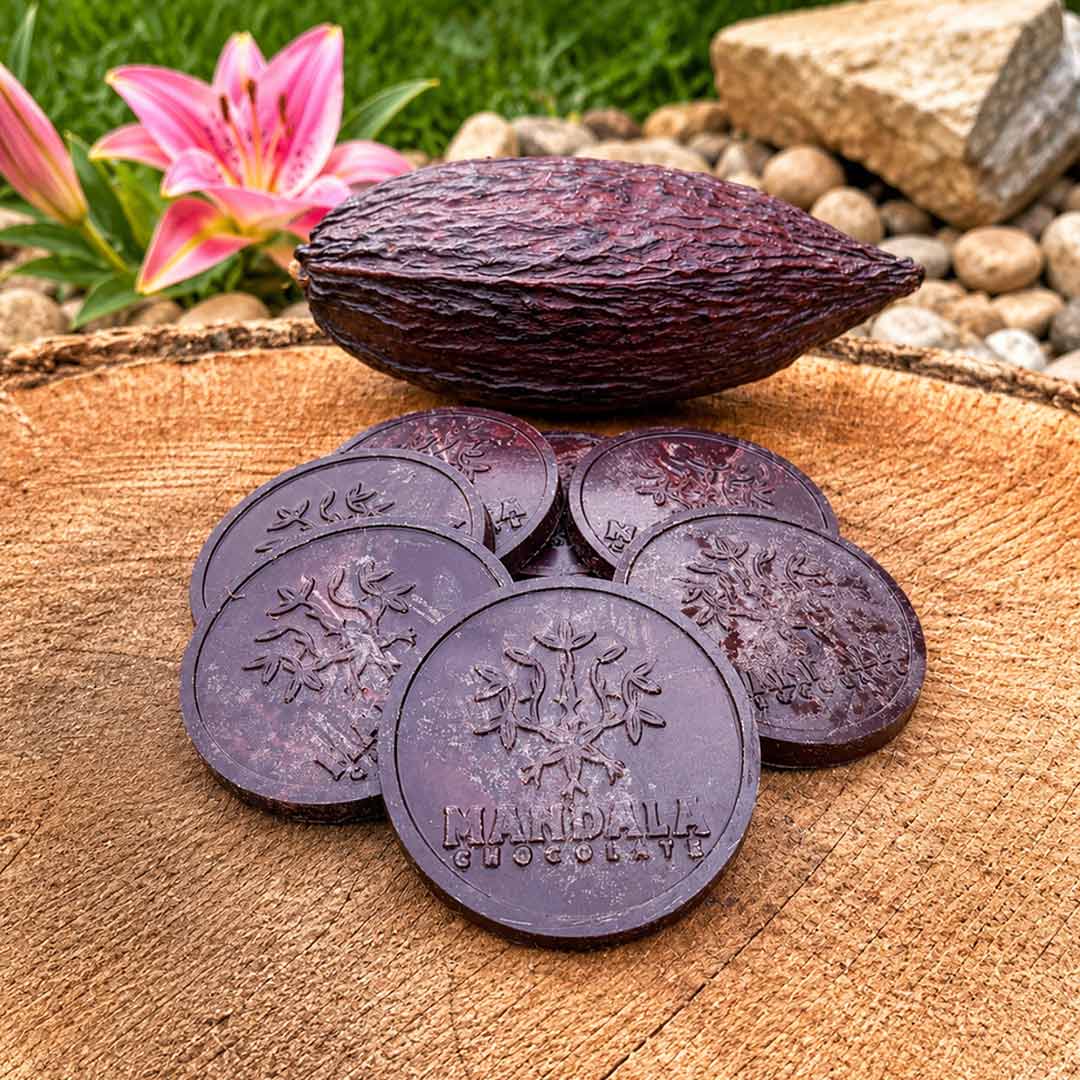
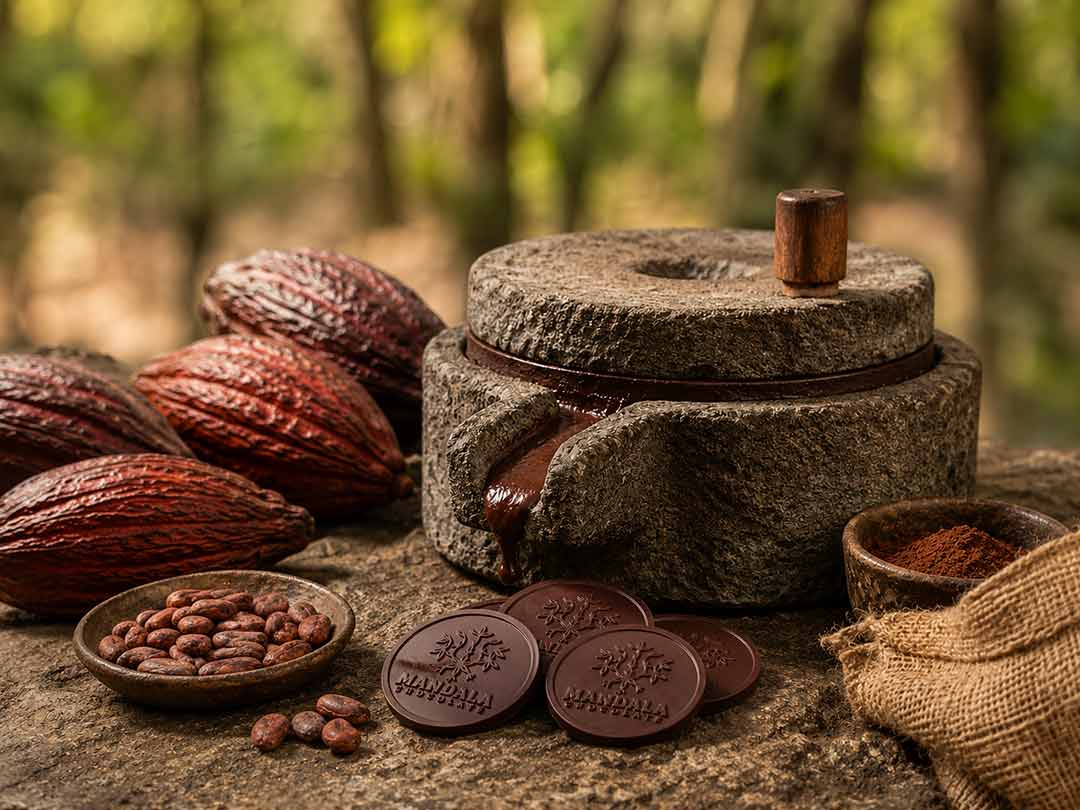
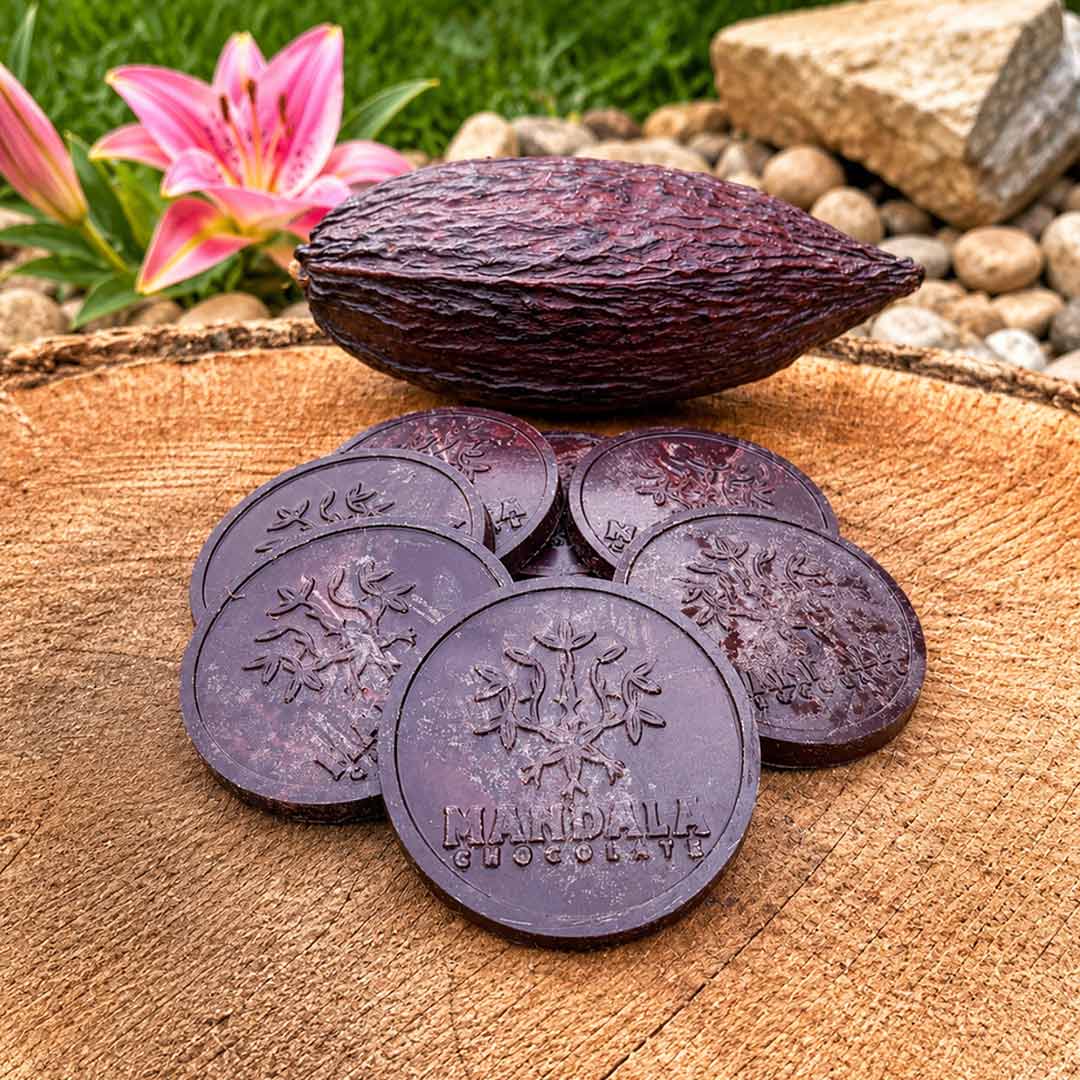
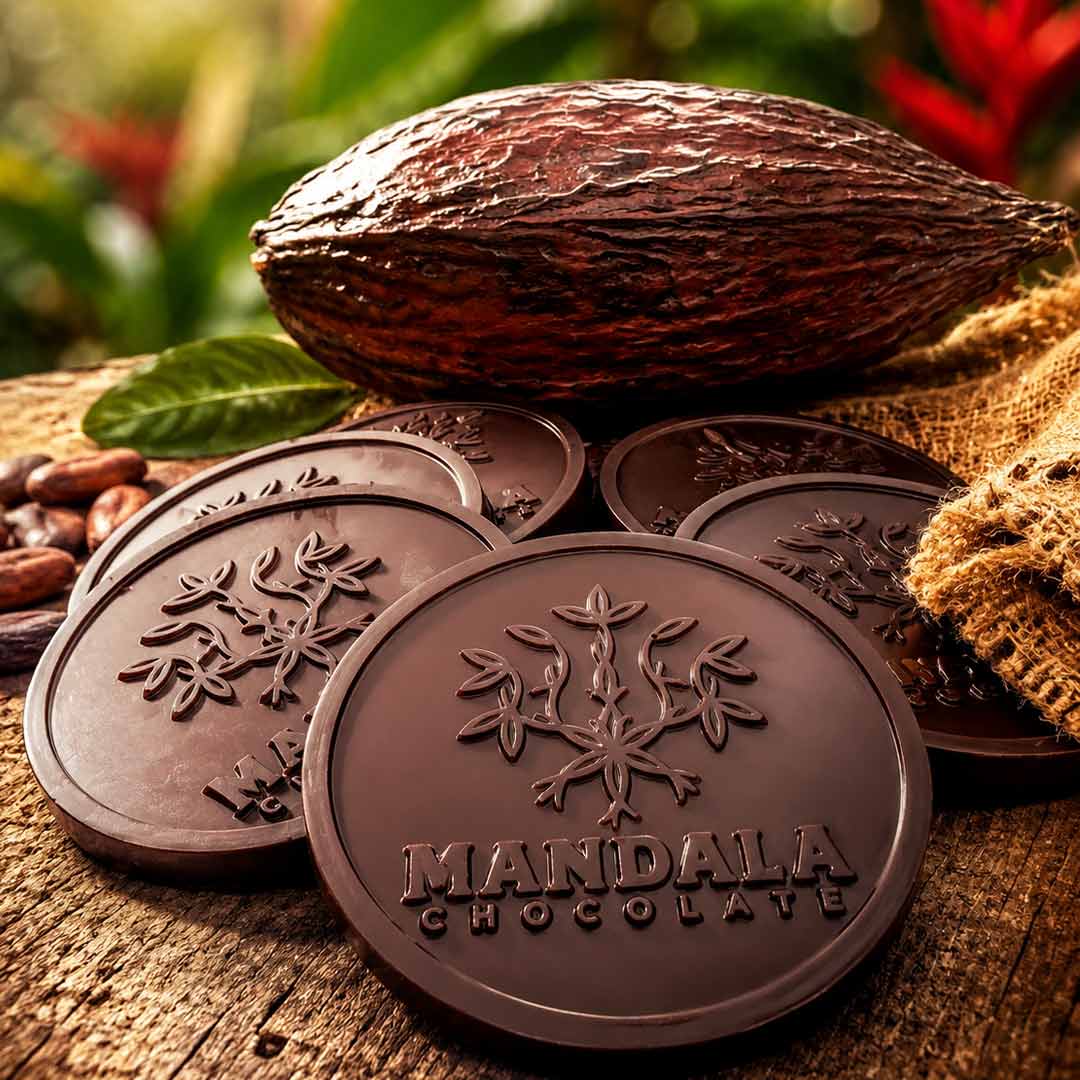
Illustration: cacao as currency, then and now
Cacao moved through hands as money long before it became dessert. The same loop still applies: land, labor, craft, ritual, reciprocity. The container has changed; the agreement has not.
Cacao was never just a treat
In Mesoamerican histories, cacao appears as food, offering, ritual substance and medium of exchange. That matters because it shows how small our modern candy definition really is.
Cacao carried value before industrial chocolate reduced it to sweetness.
Currency means trust
A thing can function as currency only when people recognize its value. Cacao's portability, desirability and cultural meaning made it more than an agricultural product.
That old story invites a modern question: what do we value when we buy chocolate now?
This kind of history has to be handled with reverence and humility. Mandala does not need to borrow sacredness it has not earned. It can simply tell the truth that cacao has carried value, ritual, and meaning far longer than modern confectionery has existed.
That wider memory gives the brand a more beautiful frame for abundance. Not luxury as excess. Abundance as right relationship: farmers, land, makers, customers, pleasure, and profit participating in a healthier circuit.
The colonial fracture
European expansion transformed cacao into a commodity inside violent systems of extraction. Any honest chocolate story has to include that rupture.
Regenerative chocolate is meaningful partly because it refuses to treat extraction as the invisible default.
Abundance without extraction
Mandala's opportunity is to speak of abundance differently: not endless consumption, but right relationship. Pleasure that gives back. Profit that stays answerable to people and land.
That is a better abundance story than luxury for its own sake.
A bar as a modern offering
A Mandala bar can be understood as a small offering of craft, cacao, herbs, land relationship and flavor. Not sacred because a brand says so. Meaningful because care is traceable.
The abundance note
Abundance is a dangerous word when it gets separated from relationship. In modern marketing, abundance can become more, more, more. More luxury. More consumption. More signal. Cacao's older story asks for something subtler.
If cacao once carried value through ritual and exchange, then a modern cacao company can ask what kind of value it wants to circulate now. Not just revenue, though revenue matters. Not just pleasure, though pleasure matters. Value as nourishment, farmer relationship, ecological reciprocity, craft, and a customer's small daily moment of warmth.
That is the abundance Mandala can stand for: not excess, but a fuller circuit of care.
A small ritual for the reader
Cacao, Currency and the Meaning of Abundance ultimately serves that kind of moment. Not a lecture. Not a thinly disguised sales page. A doorway into tasting with more presence, choosing with more care, and remembering that pleasure can participate in a better system.
Abundance is not excess
The cacao-currency story becomes beautiful when it points forward instead of backward. Abundance is not more consumption. It is better circulation: farmers paid more fairly, land treated less extractively, craft honored, customers invited into ritual instead of appetite without memory.
Value that moves through relationship
Cacao's history as currency matters because it reminds us that value has always been more than price. Value can live in trust, ritual, labor, land, taste, exchange and the way a food gathers people around meaning.
The key idea is that cacao held value before industrial chocolate taught us to value sweetness above all else. It moved through exchange, ceremony, and social meaning. It was portable wealth, yes, but also a substance of offering and relationship.
The colonial shift matters because cacao's commodification separated value from relationship. Plantation economies, forced labor, and extraction changed the story. A regenerative chocolate brand cannot skip that rupture if it wants to speak honestly about abundance.
Mandala's abundance frame is therefore win-win-win. Not abundance as luxury excess. Abundance as a healthier circuit: consumer, planet, farmer, land, maker, and business all participating in value that does not require someone else's diminishment.
What this means for a modern bar
A modern cacao company cannot recreate the world where cacao moved as currency, and it does not need to pretend otherwise. What it can do is let that history sharpen the present. If cacao once carried trust, status, ritual and exchange, then a contemporary bar can ask whether value is still moving through the whole chain or whether most of it has been trapped at the end of the shelf.
For Mandala, abundance is not excess sweetness or luxury styling. It is cacao sourced with transparency, herbs connected to a real Appalachian farm, craft slow enough to matter, packaging chosen with more ecological care, and a customer invited to eat with attention. That makes the bar feel less like a purchase and more like participation.
That is why this post can feel expansive without becoming grandiose. The reader does not need a museum tour. They need a living thread: cacao once carried value in human systems, and a modern cacao company can still ask whether its products move value with dignity.
The invitation
The modern offering is not nostalgia. It is a bar that asks value to move through land, labor, craft, pleasure and reciprocity again.
A modern abundance practice
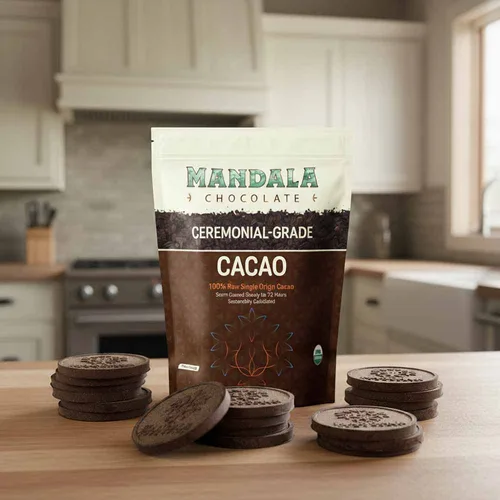
Ceremonial Cacao is the most direct product doorway here: cacao as value, ritual and daily relationship. Cacao Alchemy brings the abundance story into a richer forest register, where cacao meets yacon, chaga and reishi.
Mandala does not need to own cacao's history to honor the question it still asks: what do we value?
More from the Blog
Continue exploring cacao wellness